Best Email Marketing Software For Ecommerce
Want an all-in-one software or just want to send your customers promotions? Our best email marketing software for e-commerce lists will find you the perfect fit.
 M. Usama
On this page
- Our pick for the best email marketing software for e-commerce.
- Features and Pricing: The best e-commerce email marketing software.
- Things to look for in The Best Email Marketing Software For eCommerce
- Top Email Marketing Software for E-commerce
- Choosing The Best Software For Your eCommerce Business
- Conclusion
- FAQs
The online world can be challenging, and dealing with competition can be a hassle. This is why you must find the best email marketing software for e-commerce to fit your business needs.
Email marketing software can help you grow and scale your business by increasing your audiences and revenue.
Not only this, but you can also easily collect daily reports and learn how much revenue you generate per day through email marketing software.
These are just some perks you can enjoy with dedicated email marketing software. To simplify your selection process, we have found 11 of the best email marketing software for e-commerce, which you can implement in your business immediately.
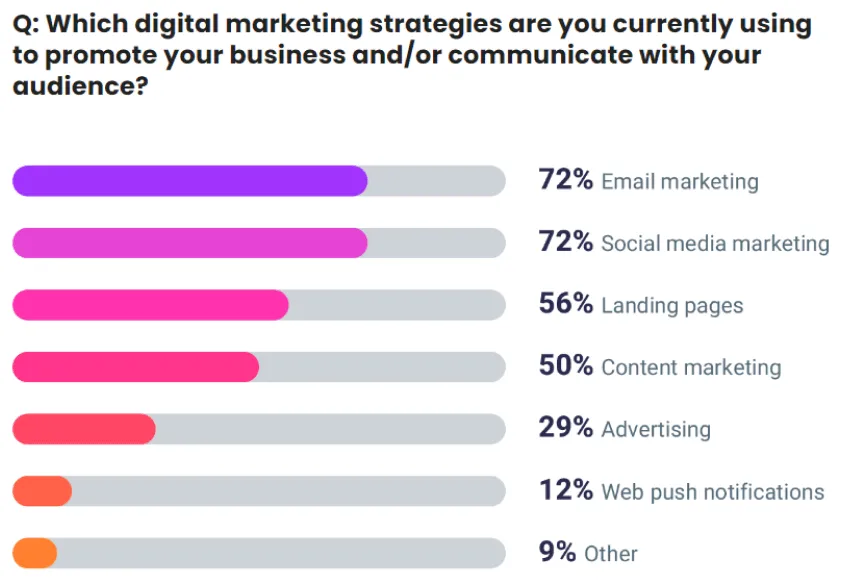
Source - https://static-web.upmetrics.co/wp-content/uploads/2024/04/02100646/email-marketing-software.png
Our pick for the best email marketing software for e-commerce.
While many excellent email marketing software is on the market, one stands out among others. Here is our top pick for the best email marketing software for e-commerce based on the features, pricing, and integration capabilities.
Mailmunch
MailMunch is one of the best email marketing software for e-commerce, and it is designed to revolutionize how businesses grow their email lists and engage with their audience.
With MailMunch, you can create stunning opt-in forms and pop-ups that captivate your website visitors and encourage them to subscribe to your email list.
Personalization features allow you to tailor these forms to each visitor, increasing their relevance and effectiveness. Integration with popular email marketing platforms makes managing your email list seamless, while robust analytics tools provide insights to optimize your campaigns.
Some benefits you can reap from Mailmunch include.
- Email Marketing Growth: MailMunch helps businesses grow their email lists by creating attractive opt-in forms and pop-ups encouraging website visitors to subscribe.
- Engagement: By capturing visitors' attention with eye-catching forms, MailMunch helps increase engagement and encourages visitors to take action on the website.
- Personalization: The software allows businesses to personalize their opt-in forms based on visitor behavior and demographics, making them more relevant and effective.
- Integration: MailMunch integrates seamlessly with popular email marketing platforms, making managing email lists and campaigns easy.
- Analytics: Businesses can track the performance of their opt-in forms and campaigns with MailMunch's analytics tools, allowing them to make data-driven decisions to improve their marketing strategies.
Whether a small business or a large enterprise, MailMunch empowers you to drive growth, boost engagement, and effectively achieve your marketing goals.
Features and Pricing: The best e-commerce email marketing software.
Here is a brief breakdown of the best email marketing software for e-commerce brands currently available on the market.
| Email Marketing Service | Free Plan/Trial | Pricing | Best Feature | Ratings |
|---|---|---|---|---|
| Mailmunch | Yes (14-day trial) | $19.99/month | Advanced lead capture and conversion tools | ⭐ 4.5 |
| Mailchimp | Yes (limited) | $20/month | Pre-built customer journey templates | ⭐ 4.5 |
| Brevo (formerly Sendinblue) | Yes | $25/month | Integrated SMS and WhatsApp campaigns | ⭐ 4.5 |
| Omnisend | Yes (limited) | $16/month | Automated branding of emails and popups | ⭐ 4.5 |
| MailerLite | Yes | $10/month | Support for selling digital products and subscriptions | ⭐ 4.5 |
| Drip | 14-day trial | $39/month | Various on-site campaign options for list building | ⭐ 4.5 |
| Klaviyo | Yes | $20/month | Personalized content based on customer interactions | ⭐ 4.5 |
| Shopify Email | Yes | $1/1000 emails | Seamless Shopify Integration | ⭐ 4.5 |
| GetResponse | 30-day trial | $19/month | Conversion funnel creation tools | ⭐ 4.5 |
| HubSpot | Yes | $20/month | Detailed reporting and analytics | ⭐ 4.5 |
| Constant Contact | 60-day trial | $12/month | Tools for event marketing and promotion | ⭐ 4.5 |
Things to look for in The Best Email Marketing Software For eCommerce
How to pick the best fit, look for
- Store Integrations
- Email designs and templates
- Email Editing
- Consumer segmentation
- Email automation
- Personalization
- Data and Reporting
- Customer relation features
- Deliverability
- Pricing
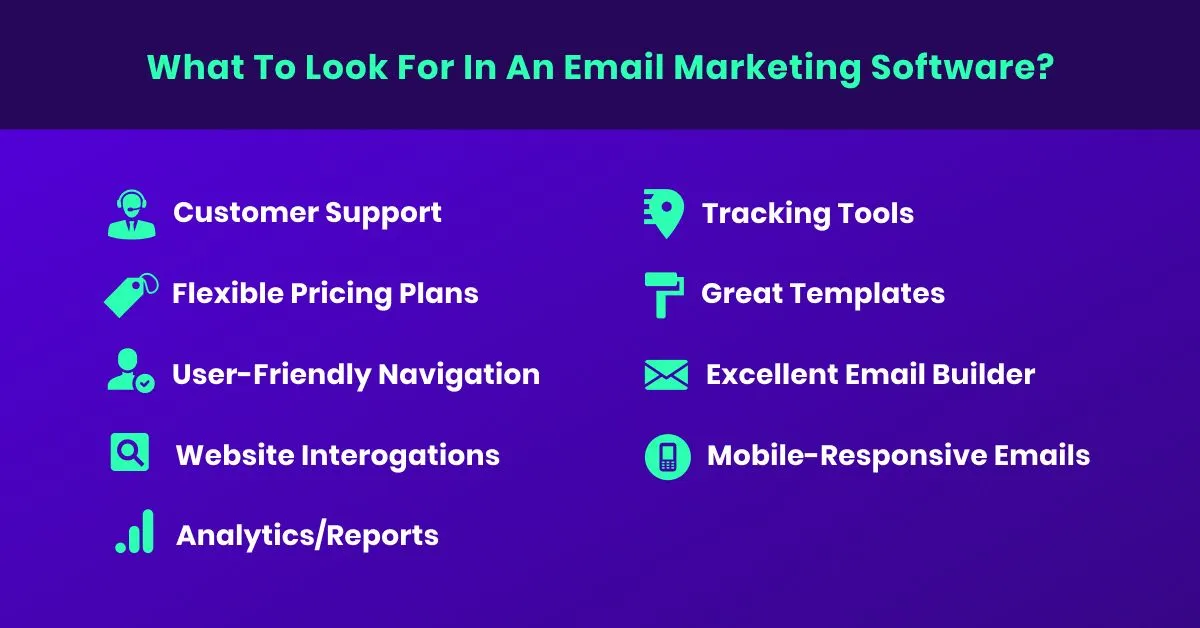
While most email marketing software has the same basic functionality, some offer additional features that make them more attractive and valuable.
Here are some features you should consider while selecting the best email marketing software for e-commerce businesses.
Store Integrations
Connecting your online store directly to your email marketing platform makes everything smoother.
This means your emails can show off your products and can be tailored to what your customers like to buy.
Good email marketing services connect easily with popular online store platforms like Shopify and simplify processes further for your business.
In the case of Mailmunch, similar seamless integration is available, ensuring that your email marketing strategy aligns perfectly with your online store operations.
Email Design and Templates
Your email marketing software should offer various attractive email templates that can be customized.
Your marketing software should also allow personalization so readers can easily read your emails on different devices.
Email Editing Tools
Look for email marketing software with a user-friendly email editing system. Since you will be editing and designing a lot of emails, you need software that is easy to use.
Again, you should look for customization options to ensure your emails are crafted to your specifications.
Customer Segmentation
Your email platform should allow you to organize your contacts into different groups based on where they live, their age, or what they've bought.
This way, you can send tailored offers to each group and boost your sales. With segmentation, your email marketing campaign might have a higher chance of reaching the right audiences.
Email Automation
Source – https://era9r2jcsww.exactdn.com/wp-content/uploads/2023/07/11.jpg?strip=all&lossy=1&quality=80&ssl=1
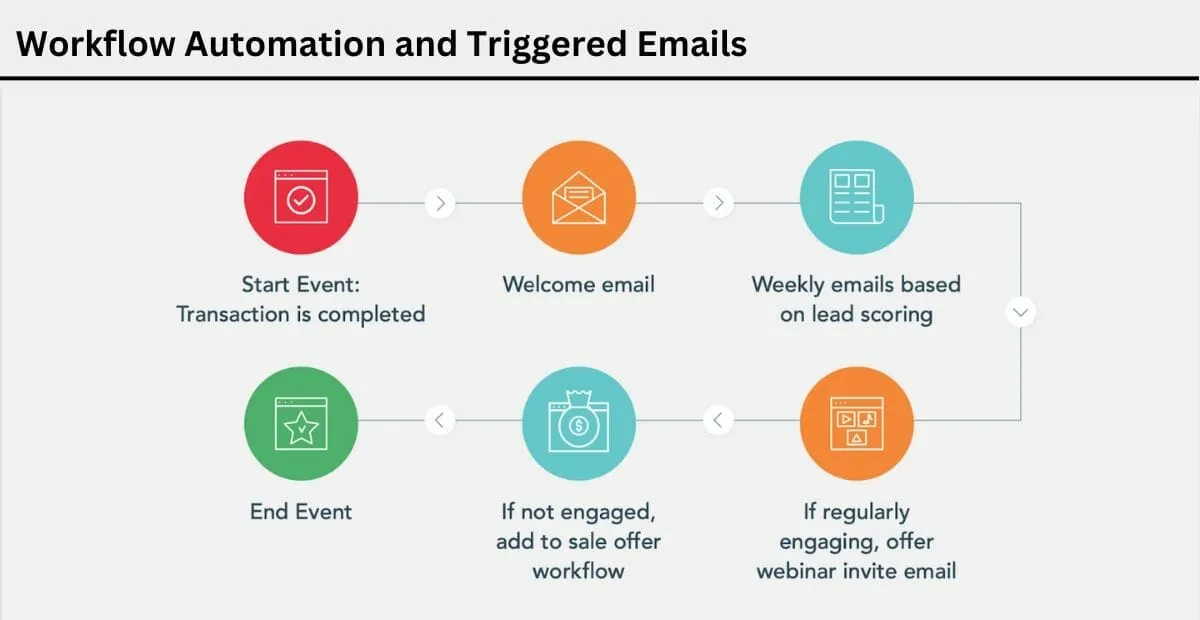
Ensure that the email service you select enables you to automate essential e-commerce marketing tasks, like sending follow-up emails after purchases and reaching out to win back customers.
They must also offer solutions for abandoned carts, as these emails typically generate three times more conversions than other automated campaigns.
This automation helps you create personalized connections with your customers and enables you to create various triggers that can send immediate messages to customers.
Personalization
Customization is critical to building a long-term relationship with your customers, and no one wants to read an email addressed to the general public.
Making your email campaigns more customized helps with your overall marketing strategy (Check out some examples here - E-commerce marketing campaigns everyone should try)
This is why, when considering email marketing software, you should look for one that allows.
- Suggesting products tailored to your customer's preferences.
- Showing the specific items they've left in their shopping cart.
Customizations that fit your exact expectations
Get started with Mailmunch’s Customizable Email Templates Today.
Data & Reporting
A good email marketing software can provide you with detailed sales reports. It should be able to report how many emails have been sent out, how many were opened, and what email conversions are offered to the business.
Customer Relation Features
Customer relationship management gives the business a birds-eye view of what the customers like and want. This feature gives you all the information you need by carefully compiling and storing all the necessary information that the customers provide to the business.
Using this data, you can create better-performing marketing campaigns, as you will know what your customers like.
While most email marketing software stores customer information, most don’t provide the tools for proper CRM. This is why you should always look into software tailored to your needs.
![Email Automation: How to Set Up Automated Workflows [Data]](/_astro/f811ad7789ec2e1cbca021af9bbbe23fac53b750-650x394_AQTDE.webp)
Deliverability
Email delivery depends on how well email marketing software can ensure that emails reach the customers. If your emails don’t get delivered or bounce, it’s like they were never sent at all.
That is why you should pick an email marketing software that ensures your emails get delivered at the right time.
While testing different email marketing software, we found that Mailmunch and Mailerlite are among the best email marketing software for e-commerce, providing high deliverability. This means your e-commerce emails are less likely to get marked as spam and are delivered to the customer's inboxes.
Try Mailmunch Today and Streamline your Marketing Analytics
Prices
When choosing an email platform, make sure it fits your budget. Look beyond just the price and consider what you'll get for what you pay. Some platforms may have similar fees but offer different features in their pricing plans.
Also, some platforms have free plans with specific limits on sending or subscribers you can use forever.
 View full image
Top Email Marketing Software for E-commerce
- Mailmunch
- Mailchimp
- Brevo
- Omnisend
- Mailerlite
- Drip
- Klaviyo
- Shopify Emails
- Getresponse
- Hubspot
- Constant Contact
1. Mailmunch
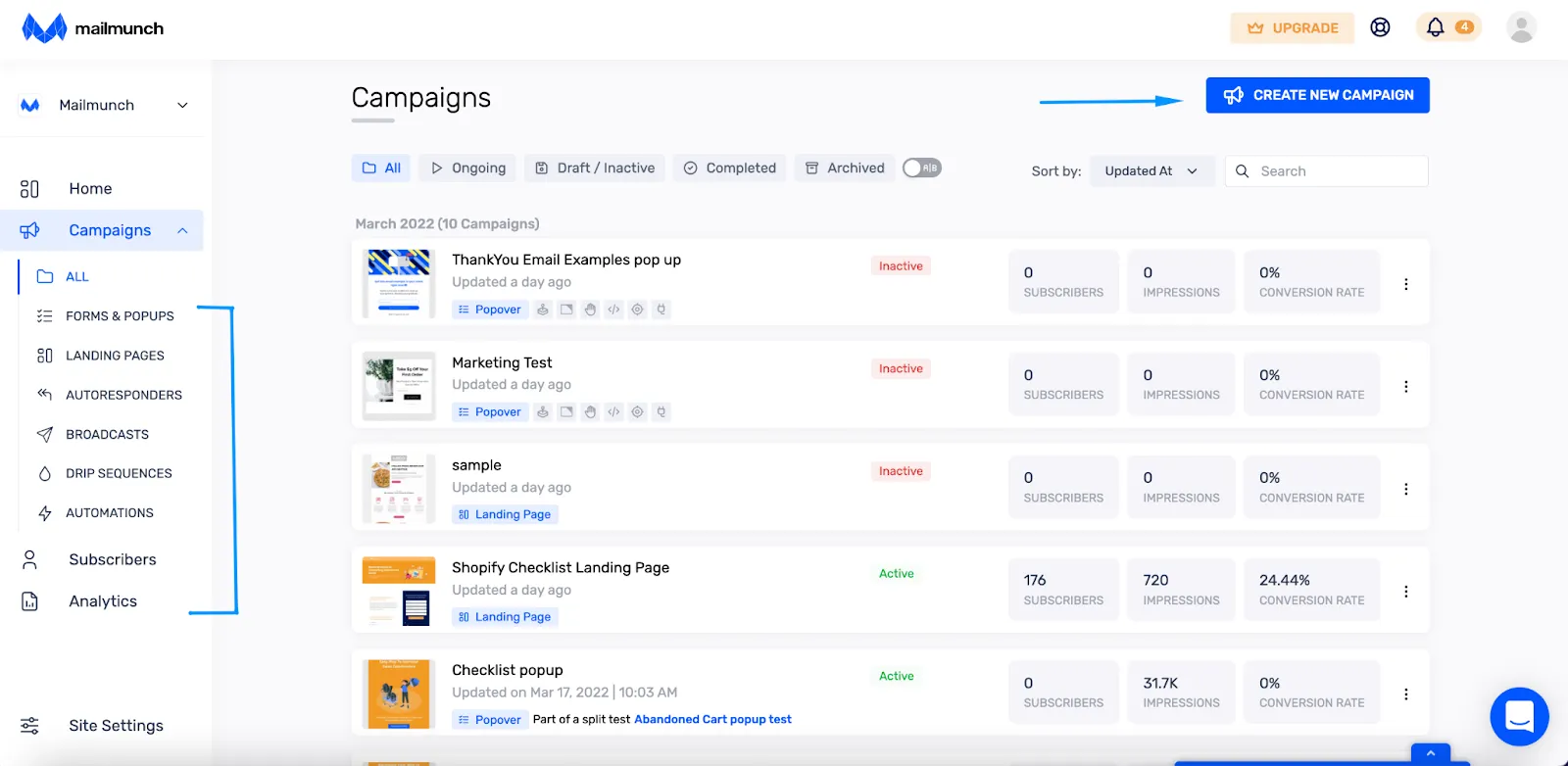
Mailmunch is an innovative platform dedicated to helping businesses expand their reach and enhance their marketing efforts through effective email list building.
With Mailmunch, businesses can create visually appealing opt-in forms and pop-ups that entice website visitors to subscribe, driving growth and engagement.
Its personalized approach allows businesses to tailor their forms to individual visitor preferences, maximizing conversion rates.
With seamless integration and powerful analytics tools, Mailmunch empowers businesses of all sizes to optimize their email marketing strategies and achieve remarkable results.
Best Features
- Customizable opt-in forms
- Exit-intent technology
- Advanced targeting options
- A/B testing
- Integration with email platforms
- Analytics and Reporting
- Mobile-friendly design
Pricing
Paid plans start at $19/month, limited free plan
Pros and Cons of Mailmunch
Pros
Easy-to-use drag-and-drop editor
Limited automation triggers
Advanced targeting options
Integration with email platforms
Occasional customer support issues
Mobile-friendly design
Cons
Some features may require a learning curve
A/B testing capabilities
Premium plans can be pricey
2. Mailchimp
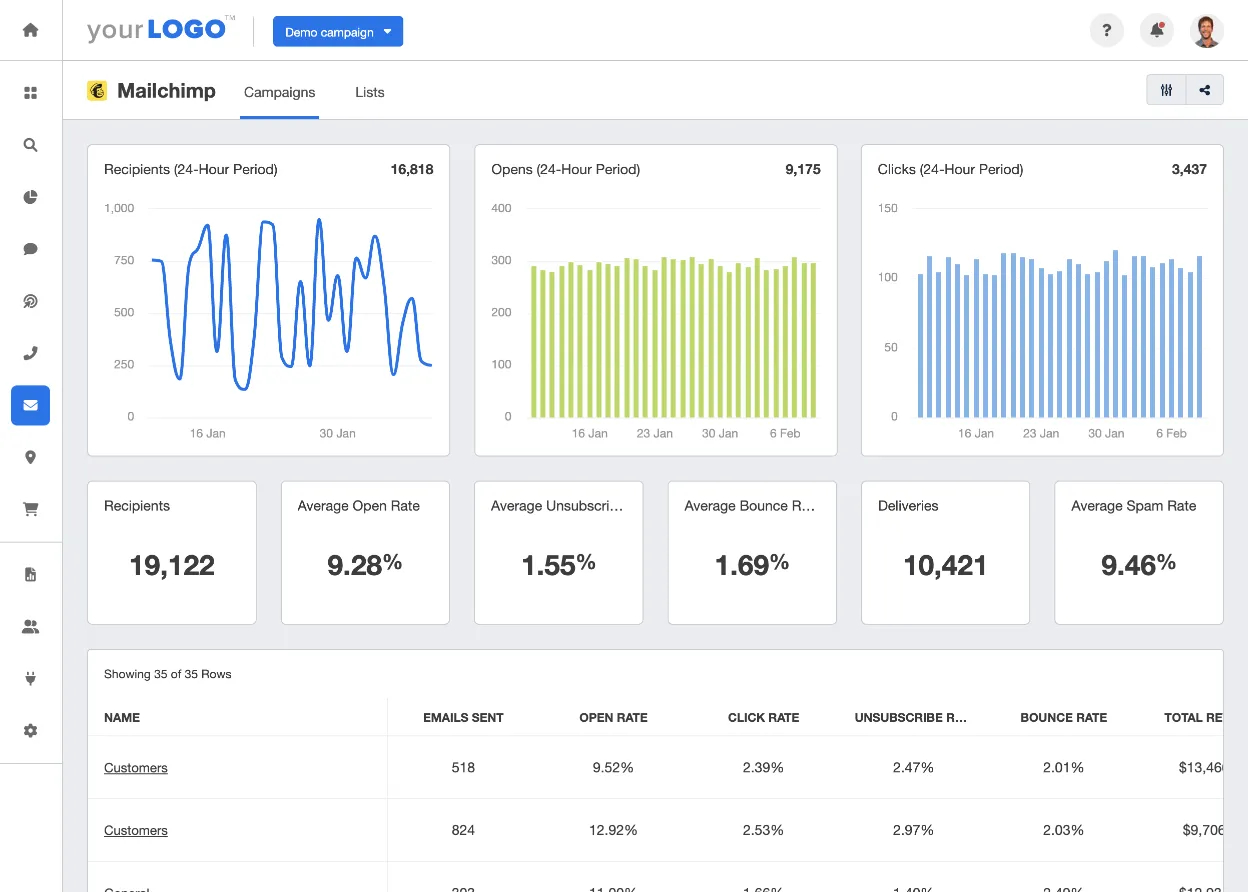
Mailchimp is a leading all-in-one marketing platform trusted by millions of businesses worldwide. It offers a comprehensive suite of tools for email marketing, automation, audience management, and more.
With Mailchimp, businesses can easily create captivating email campaigns, build and manage subscriber lists, and automate marketing processes to save time and drive results.
Its user-friendly interface and powerful features make it the go-to choice for businesses looking to grow their audience, increase engagement, and boost sales.
Best Features
- Pre-made custom plans
- Drag-and-drop editor
- Audience management
- Multivariate A/B tests
- Social media marketing
- eCommerce integrations
Pricing
Paid plans start at $20/month, limited free plan
Pros and Cons
Pros
User-friendly interface
Limited automation features
Comprehensive email marketing tools
Cons
Pricing can be high for larger lists
Extensive template library
Some advanced features require an upgrade
Integration with various platforms
Customer support can be slow at times
Robust analytics and reporting
3. Brevo
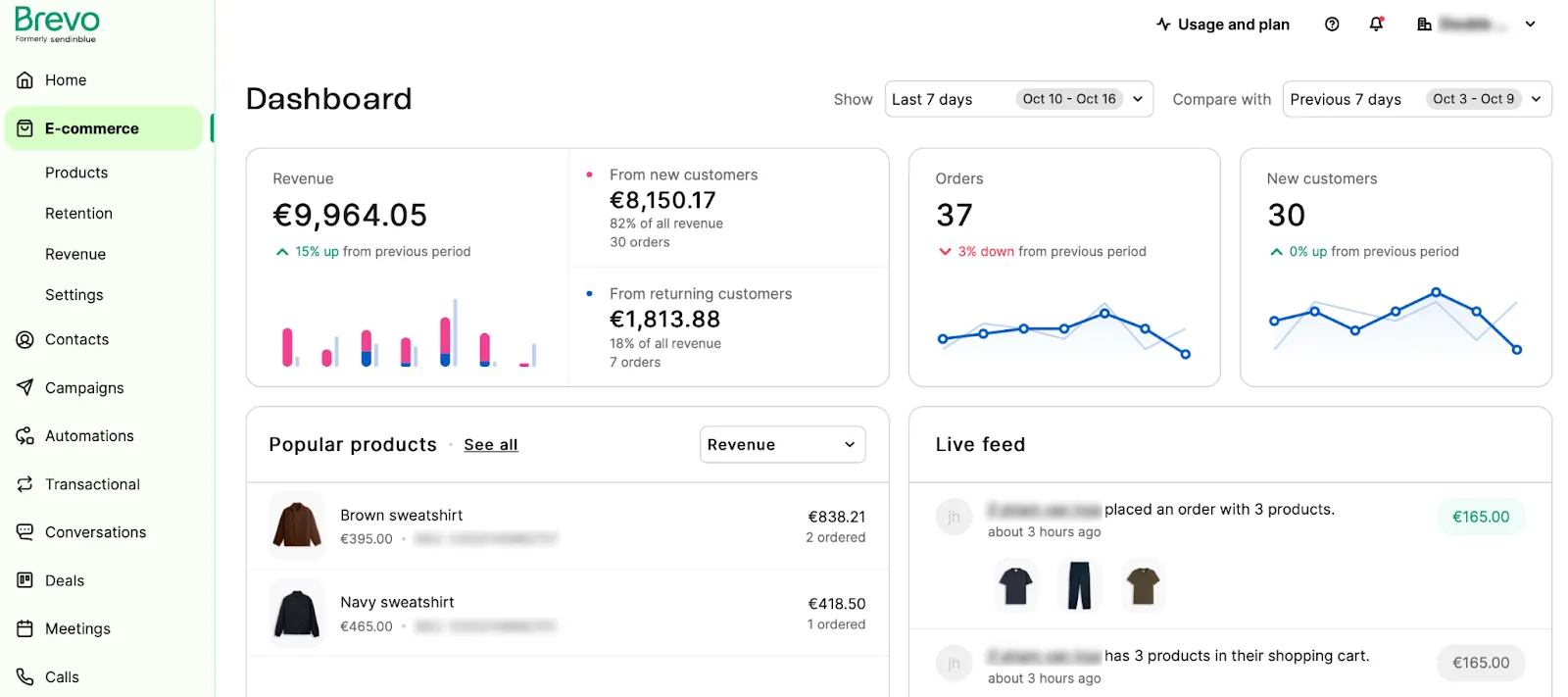
Brevo is a cutting-edge platform designed to streamline and enhance the building and managing email lists for businesses.
With Brevo, businesses can create highly customizable opt-in forms and pop-ups seamlessly integrating with their websites, capturing leads and driving conversions.
Its intuitive interface and advanced features make it easy for businesses to personalize their campaigns, segment their audience, and analyze performance to optimize results.
Best Features
- Customizable opt-in forms
- Seamless integration
- Advanced audience targeting
- Robust automation tools
- Comprehensive analytics
- Intuitive user interface
- Dedicated support
Pricing
Paid plans start at $25/month, free plan
Pros and Cons
Pros
Cons
Highly customizable opt-in forms
Requires a learning curve for new users
Seamless integration with platforms
Pricing plans may not fit all budgets
Advanced audience segmentation
Advanced features are limited in basic plans
Robust automation tools
Limited social media integration
Comprehensive analytics and reporting
Intuitive user interface
Dedicated customer support
4. Omnisend
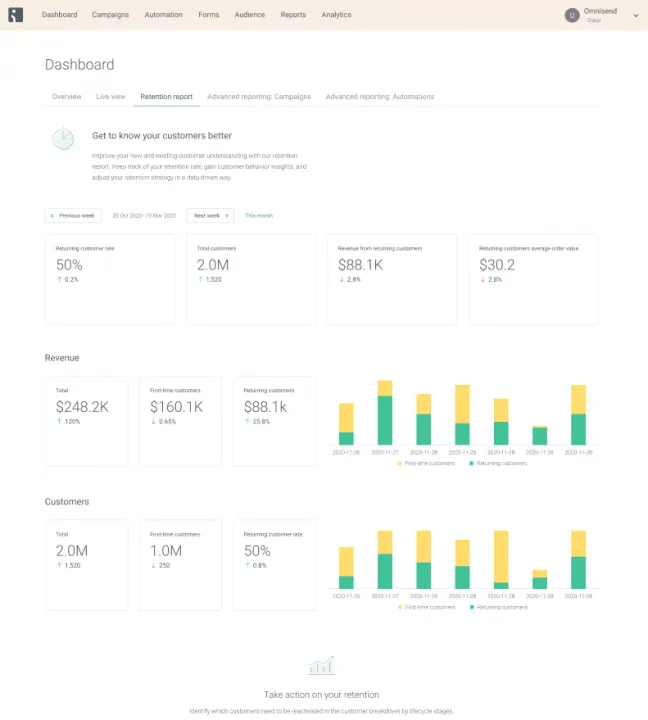
Omnisend is a powerful omnichannel marketing automation platform tailored specifically for e-commerce businesses. It offers a comprehensive suite of tools for email marketing, SMS marketing, automation, and more, all in one integrated platform.
With Omnisend, e-commerce businesses can create highly targeted campaigns based on customer behavior, purchase history, and preferences, delivering personalized experiences that drive engagement and sales.
Its user-friendly interface, advanced automation features, and robust analytics capabilities make it the ultimate solution for e-commerce businesses looking to scale their marketing efforts and drive sustainable growth.
Best Features
- Multichannel marketing automation
- Customer segmentation capabilities
- Advanced email personalization
- Built-in SMS marketing
- Automated workflows
- Product recommendation engine
- Detailed analytics dashboard
Pricing
Paid Plans start at $30/mo.
Pros and Cons
Pros
Cons
Multichannel marketing automation
Steeper learning curve
Customer segmentation capabilities
Pricing can be high for some businesses
Advanced email personalization
Limited customization options in the free plan
Built-in SMS marketing
Automated workflows
Product recommendation engine
Detailed analytics dashboard
5. MailerLite
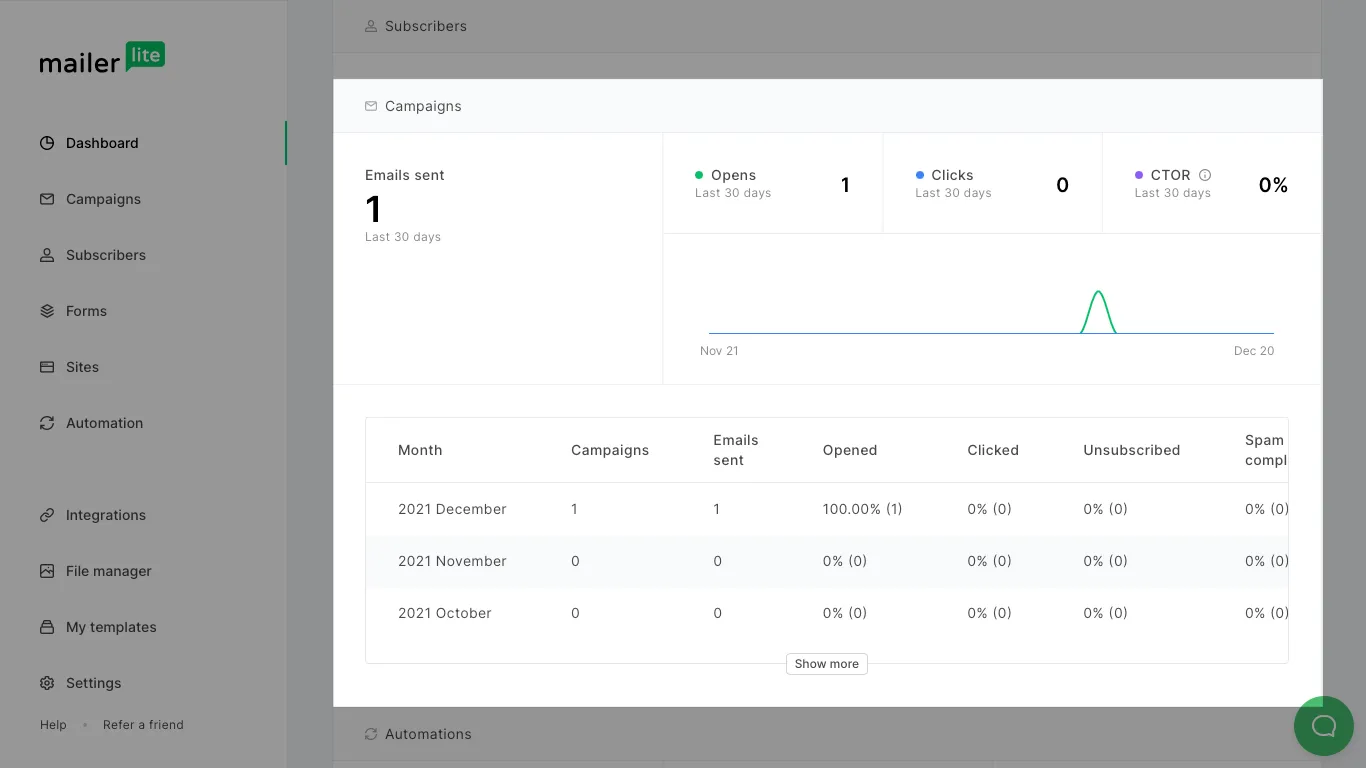
Mailerlite is an e-commerce email marketing tool known for its simplicity and user-friendly interface. Its interface is easy to navigate and can be used by beginners.
The software can be integrated seamlessly with major e-commerce platforms, making email campaigns much easier to handle.
The service offers a generous free plan with A/B testing, automation surveys, and feedback forms.
Best Features
- Premade Automation
- Easy-to-use landing page builder
- Easy-to-use website builder
- Email Deliverability
- Visual Automation builder
Pricing
Paid plans start at $10/month, free plan
Pros and Cons
Pros
Cons
User-friendly interface
Limited automation features
Generous free plan
Some automation triggers are missing
Seamless integration with eCommerce platforms
Limited trigger options for automation
Easy-to-use drag-and-drop editor
Limited customer support
Advanced audience management tools
Occasional deliverability issues
Multivariate A/B testing
Decent email deliverability
6. Drip
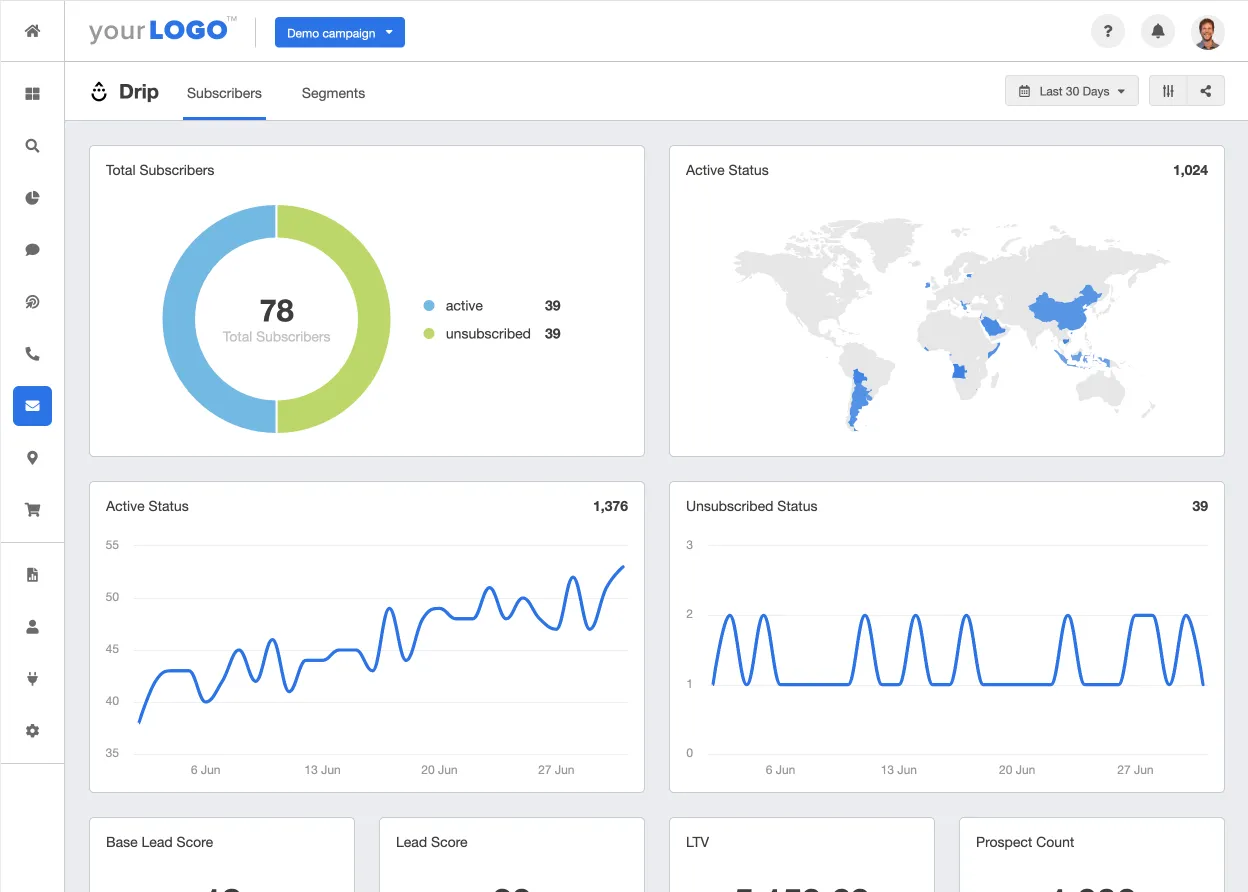
Drip is an email marketing platform designed specifically for e-commerce businesses. With Drip, you can easily create newsletters. The service offers easy drag-and-drop email builders.
The service offers automation, making it easier with its visual workflow builder. It allows you to automate campaigns across email, website, and social media. Users get access to over 20 workflow templates.
Best Features
- Visual Workflow Builder
- Advanced Segmentation Options
- Personalized Email Campaigns
- eCommerce Integration
- Detailed Analytics Dashboard
- Split Testing Capabilities
- Automation Rules Engine
Pricing
Paid plans start at $39/month, 14-day free trial
Pros and Cons
Pros
Cons
Visual Workflow Builder
Higher starting price point
Advanced Segmentation Options
A steep learning curve for beginners
Personalized Email Campaigns
Limited customer support options
eCommerce Integration
It can be overwhelming for small businesses
Detailed Analytics Dashboard
Split Testing Capabilities
Automation Rules Engine
7. Klaviyo
Klaviyo is an email marketing software tailored for e-commerce businesses. It is mainly used with Shopify stores. It provides personalization services, so you can use personalized emails while managing SMS communications.
The service offers a user-friendly interface with an email editor that allows you to create sophisticated campaigns.
AI implementation allows you to create the most suited subject lines. You can also access product suggestions based on customer behavior and A/B testing for content and design implementations.
In short, Klaviyo streamlines eCommerce email marketing with its user-friendly interface, powerful segmentation, automation tools, and features like AI-driven recommendations and automatic review collection.
Best Features
- Advanced segmentation options
- Personalized email campaigns
- Visual email editor
- eCommerce integration
- Automated workflows
- Detailed analytics dashboard
- Split testing capabilities
Pricing
Paid plans start at $20/mo, with a limited free plan.
Pros and Cons
Pros
Cons
Advanced segmentation options
The learning curve for beginners
Personalized email campaigns
Pricing may be high for some
Visual email editor
Some users report occasional glitches
eCommerce integration
Advanced features require expertise
Automated workflows
Detailed analytics dashboard
Split testing capabilities
8. Shopify Email
Shopify Email is an email marketing tool that Shopify provides for commerce. It can help you create, send, and keep track of the business emails that the company sends out.
The software offers an easy-to-navigate interface and can help you build and send email automation.
The service offers 10,000 free emails per month, and after those are up, it charges a nominal cost of $1 per 1000 emails.
Best Features
- Seamless Shopify integration
- Easy email creation
- Pre-designed templates
- Audience segmentation
- Automated campaigns
- Performance tracking
Pros and Cons
Pros
Cons
Seamless Shopify integration
Limited customization options
Easy email creation
Basic features compared to other platforms
Pre-designed templates
Less advanced segmentation options
Audience segmentation
Automated campaigns
Performance tracking
9. GetResponse
GetResponse The email marketing software is designed specifically for e-commerce businesses. It offers a unique list of features not found in most services. You can access a modern drag-and-drop email creator with various layouts and templates.
The service allows you to send automated emails and follow-ups easily, helping you sell more with less effort. You also get access to marketing analytics to better connect with your customers.
A standout feature is its conversion funnels, allowing you to build complete sales processes for your products. GetResponse provides conversion-optimized scenarios to help you make your email list and showcase your offers.
Best Features
- Email marketing automation
- Landing page builder
- Marketing automation templates
- Autoresponders and workflows
- Advanced analytics
- List segmentation
Pricing
Paid Plans start at $19/mo, limited free plan
Pros and Cons
Pros
Cons
Robust email marketing automation
A learning curve for beginners
Powerful landing page builder
Pricing can be high for some
Variety of marketing automation templates
Limited customization options in basic plans
Autoresponders and workflows
Some users report occasional glitches
Advanced analytics
Webinar hosting
List segmentation
10. HubSpot
HubSpot is an email marketing software that provides inbound marketing with a built-in CRM system. It is perfect for e-commerce businesses.
The software provides accessible sign-up forms to help grow your customer base and free CRM services to manage them.
On a positive note, HubSpot tracks store pages and campaigns that lead to new orders, helping you understand which efforts provide the best ROI. Additionally, HubSpot offers excellent customer support, onboarding services, and educational resources through HubSpot Academy.
Best Features
- All-in-one platform
- Marketing automation
- CRM integration
- Content management
- Analytics dashboard
- Lead generation tools
- Personalization features
Pricing
Paid plans start at $20/month, free tools
Pro and Cons
Pros
Cons
All-in-one platform
Higher pricing for advanced features
Marketing automation
Complexity for new users
CRM integration
Limited customization options
Content management
Some features may require training.
Analytics dashboard
Lead generation tools
Personalization features
11. Constant Contact
Designed specifically for small businesses, Constant Contact aims to connect you with customers through email and digital marketing.
It features a drag-and-drop email editor, which is user-friendly. Though its templates are outdated, they can still be customized to fit your preferences and renewed.
The platform's automation features allow you to send various emails, including welcome, abandoned cart, and birthday emails.
Constant Contact provides customizable sign-up forms and landing pages to capture leads, though they're generally simple in design.
For campaign optimization, Constant Contact offers subject line A/B testing, and its reporting tools track essential metrics like list growth, email views, and clicks.
Best Features
- User-friendly email editor
- Robust contact management
- Email automation
- Extensive template library
- Reporting and analytics
- Social media integration
- Event management
Pricing
Paid plans start at $12/mo, 60-day free trial.
Pros and Cons
Pros
Cons
User-friendly email editor
Limited automation features
Robust contact management
Pricing may be high for some
Extensive template library
Some users report occasional glitches
Email automation
Reporting and analytics
Choosing The Best Software For Your eCommerce Business
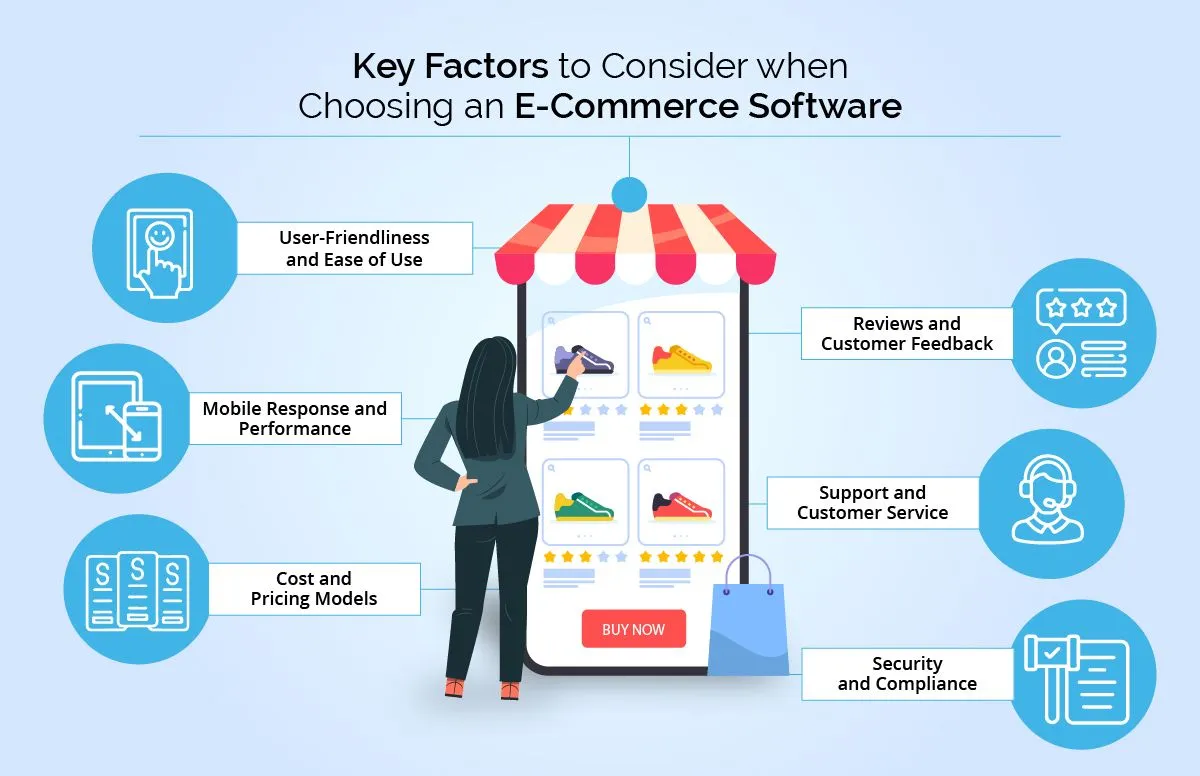
When selecting the perfect email marketing software, aligning your choice with your business needs and goals is crucial. Here are three top picks, each excelling in different aspects:
- Mailmunch: Mailmunch offers robust features to streamline your email marketing efforts. From seamless email creation and tracking to advanced automation capabilities, AI-driven Insights, and more, Mailmunch empowers businesses of all sizes to engage with their audience effectively without breaking the bank.
- Mailchimp: With its comprehensive set of features, Mailchimp stands out as a versatile option for businesses seeking advanced functionalities. From customizable templates and intuitive design tools to powerful automation and AI-driven insights, Mailchimp enables you to create targeted campaigns that drive results. While slightly expensive, its feature-rich platform covers every aspect of your email marketing strategy.
- MailerLite: If affordability is a priority without compromising quality, MailerLite is an excellent choice. Offering a budget-friendly solution without sacrificing essential features, MailerLite allows you to create professional-looking emails, segment your audience, and automate campaigns efficiently. With its user-friendly interface and cost-effective pricing plans, MailerLite is ideal for startups and small businesses looking to maximize their ROI.
Our team selected the software mentioned above based on the following factors:
- Sending Time and Delivery
- Pricing
- Moving data
- Integration with other software
- Design choices
- User-friendliness
- Customization.
Conclusion
Email marketing is essential for businesses worldwide, connecting with over 4 billion users globally. It's a powerful tool for meaningful communication. Its impressive return on investment, averaging $40 for every $1 spent, makes it a top choice for small businesses.
E-commerce businesses require excellent email marketing software and strategy to help them attract customers, while your in-house team can handle marketing strategy. We have compiled a list of email marketing software to help you make the right choice.
Before you make a choice, consider your requirements, budgets, and objectives.
If you feel Mailmunch is best for you, consider creating an account with us today and take advantage of our free trial.
FAQs
Does email marketing work with e-commerce?
Yes, email marketing does work with e-commerce, it is very helpful in creating awareness for a brand, managing customer relationships, and building credibility. These software are also helpful in generating potential leads and future sales for a brand.
What features should I look for in email marketing software for e-commerce?
When looking into email marketing software, look for features like automation workflows, segmentation capabilities, integration with e-commerce platforms, and robust analytics.
How can email marketing software help me increase sales for my e-commerce store?
Email marketing software helps you increase sales for your e-commerce store by generating viable leads and communicating your brand message. This helps you build brand credibility and awareness.
Which email marketing software integrates well with popular e-commerce platforms like Shopify?
Although most email marketing software offers integration, if you are looking for a seamless no-fuss integration with Shopify then Mailmunch is your best bet.
Can email marketing software help me recover abandoned carts and increase conversion rates?
Most email marketing platforms have tools to help businesses recover abandoned carts. They automatically send reminder emails to customers who added items to their cart but didn't finish buying. These emails can suggest other products and offer incentives to encourage customers to complete their purchases.
What kind of analytics and reporting features should I expect from email marketing software for e-commerce?
When choosing email marketing software, ensure it gives you detailed reports on your emails' performance. This includes the number of people who open your emails, click on links, buy something, and are engaged with your customers. These insights help you see what's working and what needs improvement in your email campaigns.