How to Build an Email List: A Step-by-Step Guide
Building an email list isn’t just about collecting contacts it's about building relationships that convert into long-term revenue. Start with the right tools, offer real value, attract the right audience, and nurture them with thoughtful automation.
 Ayesha Ejaz
On this page
- Why Building an Email List Should Be Your Priority
- Core Principles Before You Start
- Step 1: Choose the Right Platform and Tools
- Step 2: Create High-Converting Signup Forms & CTAs
- Step 4: Use Landing Pages & Funnels
- Step 5: Traffic Sources That Grow Lists Quickly
- Step 6: Nurture Subscribers With a Welcome Sequence
- Step 7: Segment & Personalize
- Step 8: Measure & Maintain List Health
- Quick Wins to Build Your List Faster
- Advanced Strategies
- Common Mistakes to Avoid
- Templates You Can Copy Today
- Conclusion
If you’re running an e-commerce business, your email list is one of your most valuable marketing assets. Social media algorithms change, ad costs rise, and platforms come and go but an email list gives you direct access to your customers. Learning how to build an email list allows you to launch promotions, nurture leads, drive repeat purchases, and generate consistent revenue without depending solely on paid ads.
This guide breaks down exactly how to build an email list, even if you're starting from scratch, without a website, or if you're focusing on affiliate or B2B marketing. By the end, you’ll know which tools to use, what to offer subscribers, and how to turn new signups into loyal buyers.
Why Building an Email List Should Be Your Priority
Email vs. Social Platforms: Control and Reliability
When you post on Instagram or TikTok, you rely on algorithms deciding who sees your content. With email, you own the audience, no algorithm interference, no pay-to-reach.
Email consistently outperforms social media in:
- Engagement
- Conversion rates
- Customer retention
Measurable ROI & Reuse Across Channels
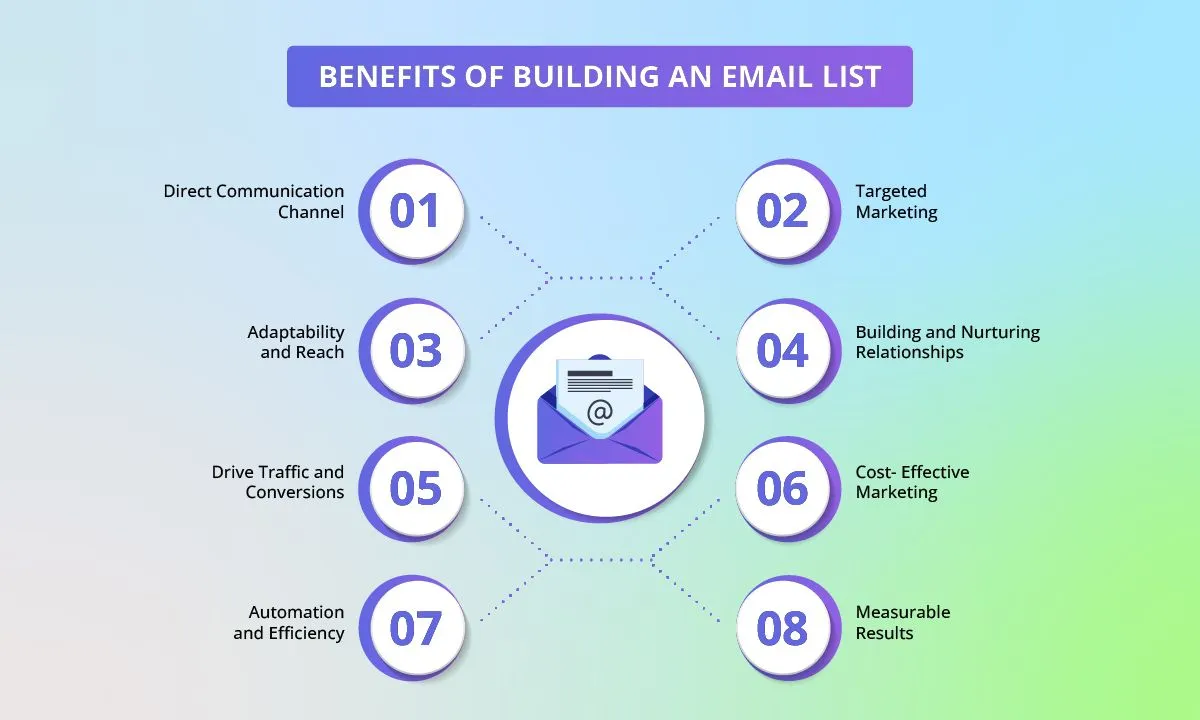
Email campaigns provide trackable performance data: open rates, CTRs, conversions, lifetime value. You can reuse email content in blogs, ads, SMS, and social posts.
Real-World Benefits
- Higher lifetime value customers
- Reliable repeat sales
- Personalization opportunities
- You control the customer relationship
Core Principles Before You Start
1. Quality Over Quantity
Better to have 1,000 engaged subscribers than 10,000 inactive ones. Engagement affects deliverability and revenue. When looking for your core audience, your first step should be to weed out the subscribers that are not engaging with your content as they are not leads rather just a weight that is pulling you back from your engaged audiences. You are focused on getting them to engage rather than providing better content to those who are already engaged.
2. Permission-Based Marketing
Never buy or scrape email lists; they lead to:
- Spam complaints
- Low open rates
- Damaged sender reputation
- Emails landing in spam forever
Your list should be opt-in only.
Step 1: Choose the Right Platform and Tools
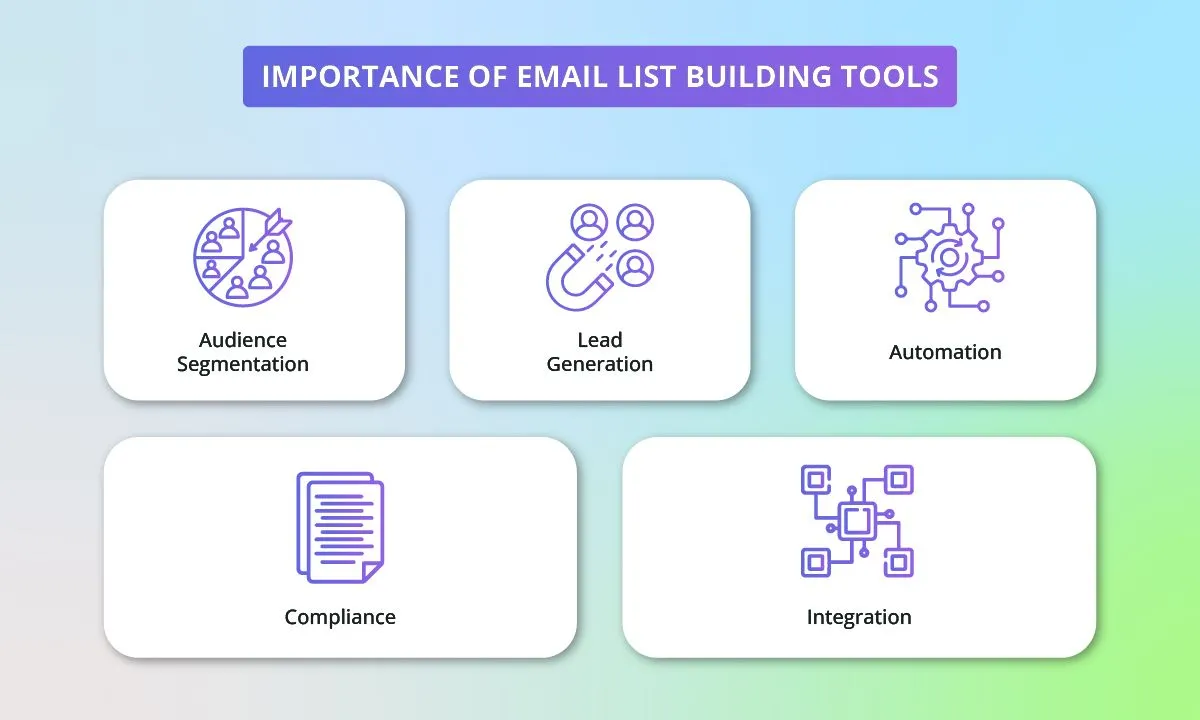
Your email platform should include:
- Form & popup builder
- Landing pages
- Segmentation & tagging
- Automation workflows
- Analytics & reporting
- Strong deliverability reputation
No Website? No Problem.
You can still build a list using:
- Link-in-bio landing pages
- Social CTAs
- Standalone lead magnet pages
Tools like Mailmunch allow you to run landing pages and popups without a site.
Step 2: Create High-Converting Signup Forms & CTAs
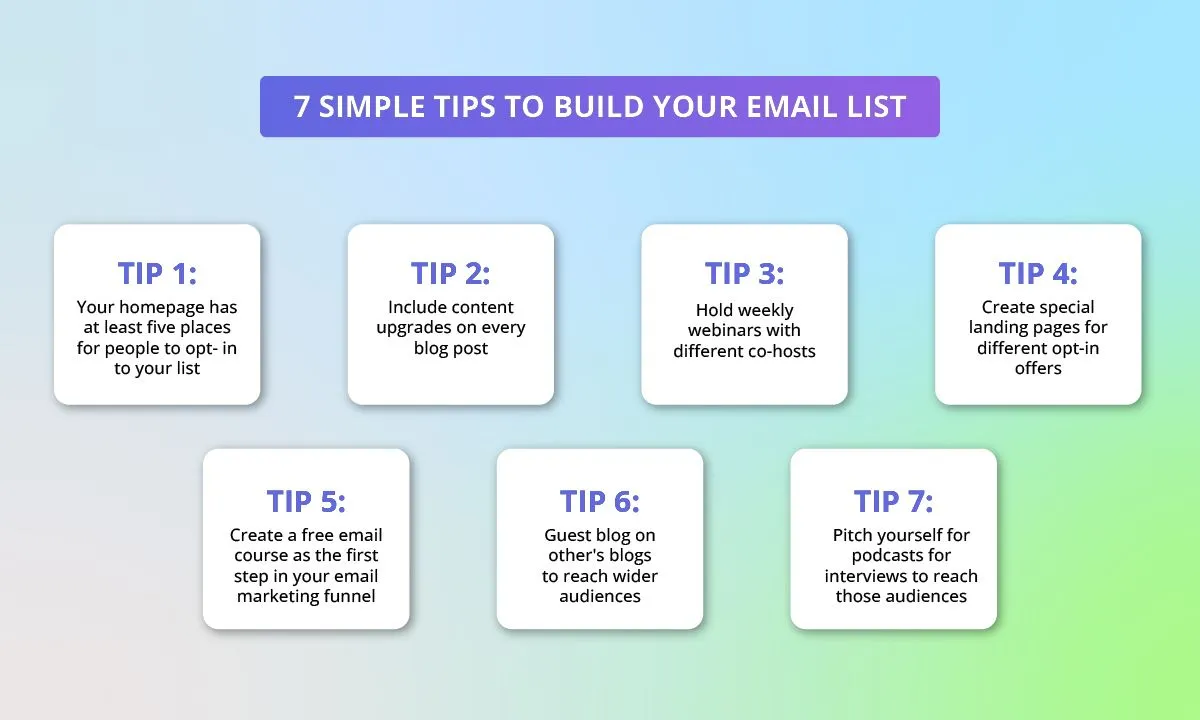
Where to Place Signup Forms
- Website header feature box
- Homepage hero section
- Exit-intent popups
- Slide-ins during scroll
- Checkout & thank-you pages
- Blog sidebar or inline
Form Best Practices
- Ask for only email (name optional)
- Clear, benefit-focused CTA
- Mobile first layout
- Add social proof (“Join 14,000+ customers”)
A/B Test
- Headlines
- Button text (“Get Discount” vs “Sign Up”)
- Timing and triggers for popups
Step 3: Offer Irresistible Lead Magnets
People subscribe because they get something valuable in return. Include proper lead magnets to help entice your readers into clicking on and looking into what you have to offer
Types of Lead Magnets
For e-commerce:
- Discount codes (e.g., 10% off first order)
- Free shipping signup
- Early access to collections
For education / affiliate marketing:
- Mini-courses
- Templates
- Checklists
- Webinars
Match Magnet to Buyer Intent
| Audience | Lead Magnet Example |
|---|---|
| Browsers | 10% off your first purchase |
| Researchers | Buyer guides or comparison checklists |
| Engaged followers | VIP access, exclusive content, or community invites |
Step 4: Use Landing Pages & Funnels
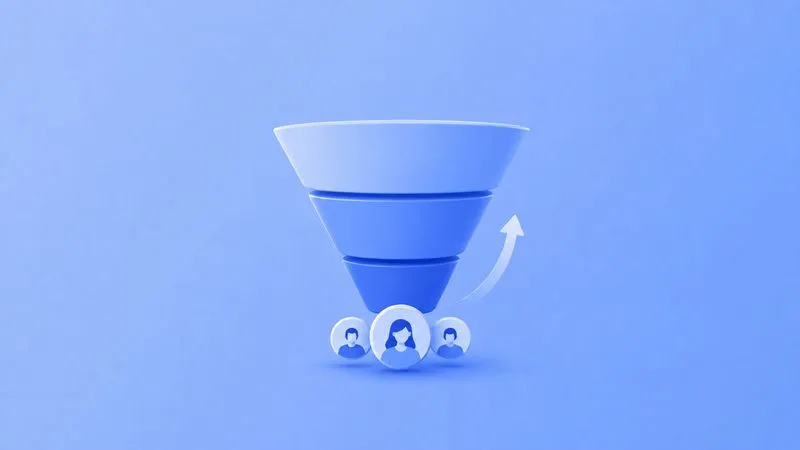
A simple funnel
Traffic → Landing Page → Lead Magnet → Welcome Email Sequence → First Conversion
Always track performance using:
- UTMs
- Source tagging
- A/B testing landing page headlines
Step 5: Traffic Sources That Grow Lists Quickly
Organic
- Blog posts with embedded CTAs
- SEO optimized how-to content
- YouTube tutorials with lead magnet links
- Instagram Stories “Swipe to Join”
Paid
- Meta / TikTok ads promoting lead magnet, not product
- Retargeting ads for cart abandoners
Partnerships
- Cross-promotions
- Influencer giveaways
- Guest emails or newsletters
Step 6: Nurture Subscribers With a Welcome Sequence
A strong 3-email onboarding series:
| Email # | Purpose | Key Message |
|---|---|---|
| Email 1 | Deliver Value | Send the lead magnet and reinforce immediate value with a clear “Here’s what you asked for!” message. |
| Email 2 | Introduce Brand Story | Build trust by explaining why your brand exists and the problem it was created to solve. |
| Email 3 | CTA to Engage | Drive the first conversion by linking to a product, webinar, demo, or next step. |
Step 7: Segment & Personalize
Segmentation increases relevance and sales:
- By behavior (clicked product links)
- By purchase history
- By engagement level
Automations to Set Up:
- Cart abandonment
- Browse abandonment
- Re-engagement campaigns
- Seasonal win-back
Step 8: Measure & Maintain List Health
Key Metrics
- List growth rate
- Open rate (target 30%+)
- CTR (target 3%+)
- Unsubscribe rate (<0.5%)
- Spam complaints (<0.1%)
List Hygiene
- Remove inactive subscribers every 90 days
- Validate risky emails
- Use double opt-in for higher quality lists
Quick Wins to Build Your List Faster
- Add signup link to Instagram bio
- Add CTA to email signature
- Turn blogs into downloadable PDFs
- Run short giveaways (ensure opt-in consent)
Advanced Strategies
- Content upgrades: extra bonus content per blog post
- Exit-intent personalization: show different popups based on visitor behavior
- CRM integrations: sync sales & email behavior for targeted automation
Common Mistakes to Avoid
| Mistake | Problem Caused |
|---|---|
| Buying email lists | Leads to spam complaints and damages deliverability. |
| Asking for too much information | Creates friction and results in low conversion rates. |
| No welcome sequence | New subscribers lose interest due to lack of early engagement. |
| Poor mobile UX | Causes form abandonment on mobile devices. |
Templates You Can Copy Today
Landing Page Copy Checklist
1. Clear Headline With a Strong Benefit
Purpose: Instantly communicate what the visitor gets and why it matters.
Your headline should answer the question:
“What’s in it for me?” within 3–5 seconds.
Best practices:
- Focus on the outcome, not the feature
- Be specific and value-driven
- Keep it short and scannable (10–14 words is ideal)
Good examples:
- “Increase Email Open Rates by 32% in 30 Days”
- “A Free Guide to Building High-Converting Email Funnels”
Avoid:
- Vague headlines like “Welcome” or “Our Latest Resource”
- Internal language your audience doesn’t use
2. Short Supporting Statement
Purpose: Add clarity and remove friction by explaining how the benefit is delivered.
This line supports the headline and gives context without overwhelming the reader.
Best practices:
- 1–2 concise sentences
- Explain who it’s for and what they’ll learn
- Reinforce credibility or ease of use
Example:
“This step-by-step playbook shows marketers exactly how to write, test, and optimize emails that convert without complex tools or guesswork.”
Think of this as the bridge between curiosity and action.
3. Visual or Preview of the Lead Magnet
Purpose: Make the offer feel tangible and real.
A visual preview increases trust and helps visitors understand the value faster.
Common formats:
- eBook cover or guide mockup
- Dashboard or template preview
- Short explainer video (10–20 seconds)
- Carousel showing what’s inside
Why this matters:
- Reduces uncertainty
- Improves perceived value
- Helps visual learners grasp the offer instantly
If it looks polished, visitors assume the content is too.
4. Privacy Reassurance
Purpose: Remove fear and hesitation around sharing personal information.
Many users abandon landing pages because they worry about spam or misuse of their data.
Best practices:
- Keep it short and human
- Place it near the form or CTA
- Avoid legal jargon
Effective examples:
- “No spam. Unsubscribe anytime.”
- “We respect your inbox—your data stays private.”
- “Your email is safe with us.”
This small line can significantly increase form completion rates.
5. Single CTA Button
Purpose: Focus attention and drive one clear action.
Your landing page should have one goal; not multiple choices.
Best practices:
- Use action-oriented language
- Reinforce the benefit in the CTA text
- Make the button visually prominent
Strong CTA examples:
- “Get the Free Guide”
- “Download the Checklist”
- “Start Improving My Emails”
Avoid:
- Multiple CTAs competing for attention
- Generic text like “Submit” or “Click Here”
One page, one action, zero distractions.
3-Email Welcome Sequence
- Email #1: Subject: Your Guide is Here 🎉
Hi {Name}, here’s what you requested: {link}. Can’t wait for you to try it!
- Email #2: Subject: Our Story in 60 Seconds
Quick intro to who we are, why we exist, and how we help people like you.
- Email #3: Subject: Ready to Get Started?
Share top products / resources / next steps with clear CTA.
Conclusion
Building an email list isn’t just about collecting contacts it's about building relationships that convert into long-term revenue. Start with the right tools, offer real value, attract the right audience, and nurture them with thoughtful automation. Whether you’re an e-commerce brand, an affiliate marketer, or building a business from scratch, your email list gives you control, stability, and growth.